Disclosure: This guide contains Amazon affiliate links. As an Amazon Associate I earn from qualifying purchases, at no extra cost to you.
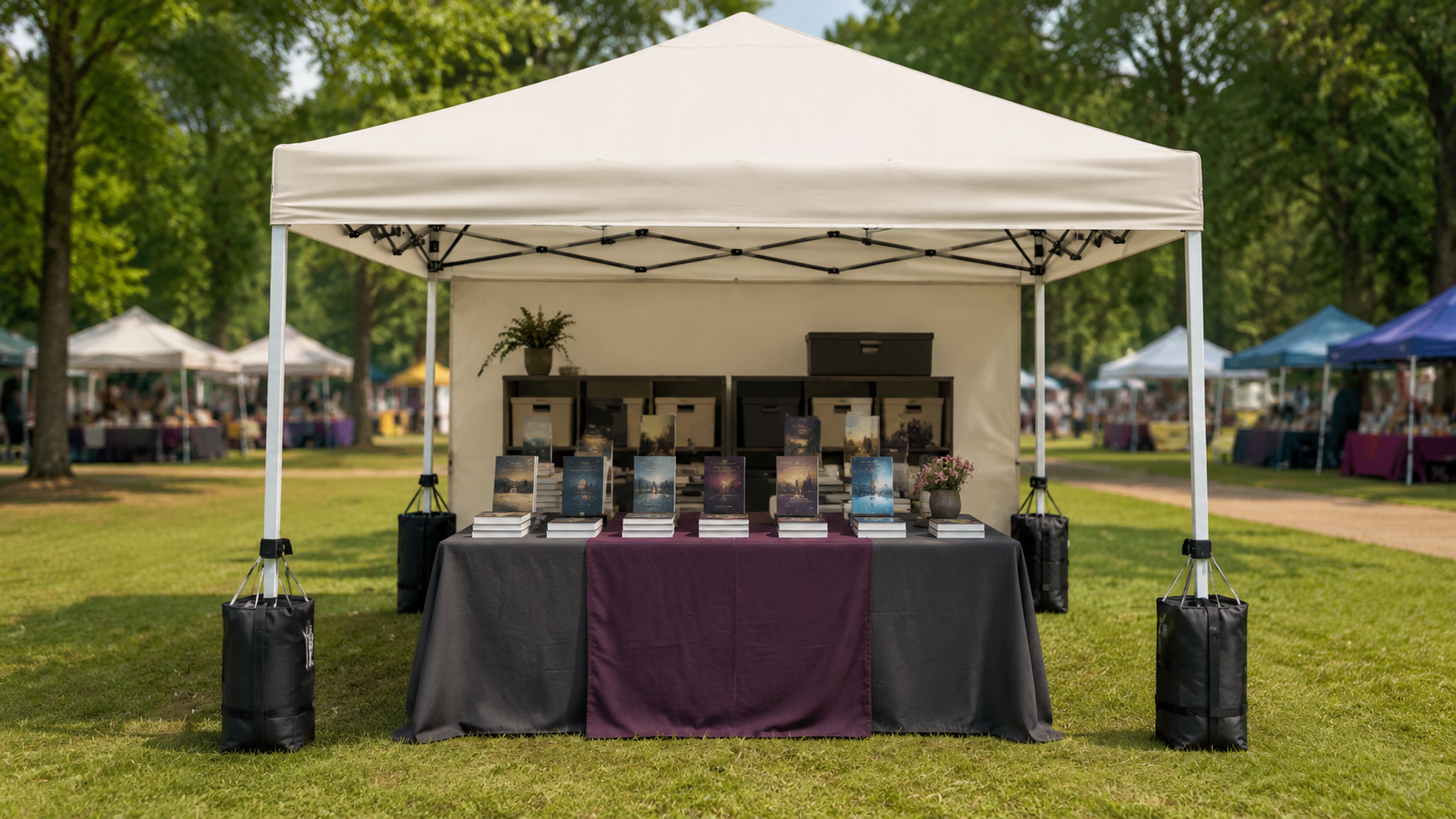
The canopy itself is only half the purchase. Outdoor-event rules, ballast, rain drainage, wind, vehicle space, setup help, and the path from parking to the booth determine whether a model is actually practical.

Key Takeaways
- Check the organizer’s booth dimensions and canopy rules before buying.
- Balance frame durability with the weight and packed size you can transport.
- Budget for required ballast, a useful carry bag, and the complete setup.
- Follow the event and manufacturer instructions, and plan for changing weather.
Table of Contents
- How this author-event canopy guide was evaluated
- Best canopy choices for author events
- 1. Commercial steel canopy: best for repeat book fairs
- 2. One-push canopy: best for a solo author
- 3. Compact canopy: best when the parking route is the real problem
- Canopy weights are not optional accessories
- Do authors need canopy sidewalls?
- Protect books from outdoor conditions
- The at-home setup test
- Get the shelter rules in writing before loading the car
- Decide how you will stop selling and protect the stock
- Final verdict
- Frequently asked questions
How this author-event canopy guide was evaluated
Publish Smarter reviewed manufacturer specifications and common vendor-event needs on September 2, 2026. We prioritized the standard 10-by-10 footprint, frame weight, packed transport, setup method, sidewall options, weather handling, and compatibility with ballast. We also considered a solo author’s need to protect books without creating an unsafe booth.
Hands-on status: The setups below were not all personally tested. Canopy safety depends on the exact model, conditions, installation, and event rules. Follow the organizer and manufacturer, use required weights, and take the canopy down when weather exceeds safe limits.
Best canopy choices for author events
| Canopy type | Best for | Tradeoff |
|---|---|---|
| Commercial steel 10×10 | Frequent outdoor markets and repeat use | Weight varies by exact frame and included bundle; verify the selected model |
| One-push 10×10 | Solo setup and occasional events | Lighter convenience may mean fewer commercial features |
| Compact 10×10 | Smaller vehicle or difficult parking route | Check coverage, packed length, and durability carefully |
| Custom printed canopy | Established event schedule and consistent branding | High cost; artwork and replacement panels must be correct |
| Event-provided canopy | First event or rare outdoor appearances | Little control over condition, walls, color, or placement |
1. Commercial steel canopy: best for repeat book fairs
A commercial-style steel frame is the durable starting point when outdoor markets are a regular part of the author business. For example, ABCCANOPY lists its S2 Crux Start 10-by-10 steel model at 23.15 kilograms—about 51 pounds. That weight can feel reassuring once erected, but it also affects stairs, loading, and solo setup.
Look for replaceable top fabric, adjustable height, pinch-resistant controls, a wheeled bag, and clearly available sidewalls and parts. A heavier frame does not eliminate the need for ballast and does not make a canopy safe in every wind condition.
2. One-push canopy: best for a solo author
A center-lock or one-push design reduces the amount of walking around the frame during setup. It is useful when you are working alone and need to keep books, cash, and equipment within sight. Compare the actual packed weight and bag quality rather than assuming every “easy setup” model is light.
Practice at home with the same helpers—or lack of helpers—you will have at the event. If extending the final leg or lifting the bag into a vehicle is unsafe alone, choose a lighter frame, use a folding cart, or arrange assistance.
3. Compact canopy: best when the parking route is the real problem
A compact packed frame can matter more than a few pounds of advertised weight. Measure the vehicle opening, cargo length, hallway, elevator, and storage area. Then consider how far the booth is from parking. A canopy that fits the event space but not the car is not portable.
Use the collapsible wagon guide for author events to plan the route, but check whether the folded canopy length fits inside the wagon rather than balancing it dangerously across the top.
Canopy weights are not optional accessories
Many outdoor events specify a minimum amount and type of ballast per leg. Use the organizer’s rule even if the manufacturer suggests something different; when the requirements conflict, ask before the event. Secure every leg and keep weights inside the booth footprint so customers do not trip.
Weight bags are easier to transport empty but must be filled correctly and fully closed. Solid plates are predictable but heavy from the first step. Water weights depend on access to water and cannot be assumed acceptable. Stakes may supplement a setup on suitable ground but are not a substitute for required weights and cannot be used on pavement.
Do authors need canopy sidewalls?
One removable sidewall is useful for low sun, light sideways moisture, visual separation, and a clean background behind the table. Four walls can turn a breezy booth into a sail and may violate visibility or safety rules. Start with one compatible wall and add only after you understand the events you attend.
Use solid panels carefully. A wall that protects books from afternoon sun can also block airflow, hide the display from an aisle, or collect wind. Mesh or half-wall configurations may suit some markets, but only if the frame and organizer allow them.
Protect books from outdoor conditions
- Keep unopened inventory in lidded plastic bins off the ground.
- Use display copies at the table edge and protected sale copies behind them.
- Carry clear table covers or large clean bags for a fast rain response.
- Angle tables so runoff cannot drip onto books or customers.
- Lower or dismantle the canopy when directed; books can be replaced more easily than someone injured by equipment.
- Never use an open flame or unsafe heater beneath the canopy.
An exact-model check before comparing canopy prices
ABCCANOPY’s S1 Nova Base Lite Commercial canopy with window sidewalls lists the 10×10 version at 120 × 120 × 135 inches and 63.8 pounds. Its published package includes a steel frame, top, wheeled bag, three window walls, one door wall, four sand bags, and ropes and stakes. Specifications checked September 30, 2026. This is one particular bundle; other ABCCANOPY frames and wall packages have different weights and inclusions. Empty weight bags are not filled ballast.
Budget for the whole outdoor setup
This illustrative worksheet uses placeholder amounts, not a live quote for the model above. Replace them with the exact package and your event’s anchoring requirements.
| Item | Example allowance | Check before buying |
|---|---|---|
| Canopy, top, and carry bag | $220 | Confirm footprint, packed length, and included bag |
| Event-approved weights and filling material | $80 | Confirm the required weight for each leg and permitted attachment method |
| Optional compatible wall | $35 | Subtract this allowance if the chosen bundle already includes the wall you need |
| Extra transport help | $45 | Check your vehicle space and load-in route; reuse equipment you already own |
| Illustrative equipment total | $380 | Excludes event fee, books, tax, shipping, table, and weather-related changes |
Plan the shelter together with the author book fair checklist so its weight and packing space fit the complete event load.
The at-home setup test
- Mark a 10-by-10 square and confirm the legs, weights, tables, chair, and customer path all fit.
- Time setup from a packed vehicle without skipping ballast.
- Confirm one person can safely lift and position every component.
- Attach the wall and check that it does not distort or pull the frame.
- Run clean water over the roof away from books to observe drainage and pooling.
- Check head clearance, exposed frame ends, cords, and trip points.
- Photograph the finished setup so it can be repeated quickly.
- Pack in reverse order and label the hardware bag.
Once the shelter is chosen, plan the display with the author-event table shopping list and book display stand comparison.
Get the shelter rules in writing before loading the car
Send the organizer a short equipment description and ask for the rules that apply to your assigned space. Include the canopy footprint, whether you plan to use walls, and whether you will be setting up alone. A generic vendor map may not answer questions about the surface or anchoring.
You can adapt this message: I’m bringing a 10-by-10 canopy, a book table, and boxed inventory. Please confirm the permitted canopy type, required ballast for each leg, allowed attachment method, sidewall rules, and loading window. Are stakes permitted, and who will announce a weather-related closure?
Make a one-page setup brief with the organizer’s answer, your exact equipment manual, the table layout, and the contact number. Check that the whole package fits your transport plan, including filled ballast rather than only empty weight bags.
| Question | Why the answer changes the plan |
|---|---|
| What is the surface? | Pavement, lawn, and gravel can require different approved anchoring arrangements. |
| What is included in the footprint? | Legs, weights, walls, and storage need to fit the permitted area. |
| Are helpers required or available? | The exact frame and ballast must be manageable during setup and pack-down. |
| Who directs a closure? | You need an authoritative instruction and a place to go. |
If the event requirements and equipment instructions conflict, resolve the question with the organizer and manufacturer before attending. Do not improvise a substitute attachment because the supplied accessory looks similar.
Decide how you will stop selling and protect the stock
A canopy is part of the event setup, not a reason to keep trading through unsafe conditions. Read the equipment’s weather limitations and the organizer’s closure procedure. Do not adopt another exhibitor’s wind threshold as if it applies to your exact frame and site.
- Keep most sale stock in closed containers and use a smaller number of display copies.
- Keep the route to the agreed safe area free of cartons and optional decor.
- Assign who will secure inventory, notify a helper, and follow the organizer’s directions.
- Plan pack-down while conditions are safe, using the required help and the equipment instructions.
For a routine drizzle that the event and equipment rules allow you to work through, check where water runs before placing stock near an edge. If conditions exceed the permitted setup, stop and follow the closure plan rather than trying to save the display first.
Afterward, inspect the frame, connections, fabric, and packing materials before storing them. Record what became wet or damaged and what made pack-down difficult. That tells you whether the next purchase should be a better storage bin, compatible replacement part, or a different transport arrangement.
Final verdict
Choose a commercial steel 10-by-10 canopy if outdoor events are frequent and the weight is manageable. Choose a one-push or compact model if solo transport is the limiting factor. In every case, budget for approved weights and a useful carry bag at the same time as the frame. A cheaper canopy without safe ballast is not a complete purchase.
Frequently asked questions
Is a 10×10 canopy the standard size for book fairs?
It is a common vendor-booth footprint, but not universal. Some events provide a smaller space, indoor table only, assigned canopy, or strict frame color and fire-safety requirements. Read the current vendor agreement before ordering.
How much canopy weight do I need?
Use the event’s written minimum and the manufacturer’s instructions for the exact model and conditions. There is no single amount that makes every canopy safe in every wind. If unsafe weather develops, dismantle the canopy.
What canopy color is best for selling books?
A light or neutral interior keeps covers readable and the booth welcoming, while a brand color can improve recognition. Event rules, heat, replacement-top availability, and how the color changes book-cover appearance are more important than trendiness.
Specifications were checked September 2, 2026 and can change. Confirm event rules, fire requirements, weather limits, assembly instructions, dimensions, warranty, and ballast guidance before use.